
Circular Economy & Waste Management
The future of sustainable fashion is Africa at Twyg’s Africa Textile Talks
12 Jun 2026
 |
Tanzanian duo win H&M Foundation’s 2026 Global Change AwardKelTex, the Tanzanian duo transforming seaweed into biodegradable leather alternatives, is among 10 winners of H&M Foundation’s Global Change Award (GCA) 2026. Their groundbreaking work offers an eco-friendly, innovative solution that is shaping the sustainable future of fashion. 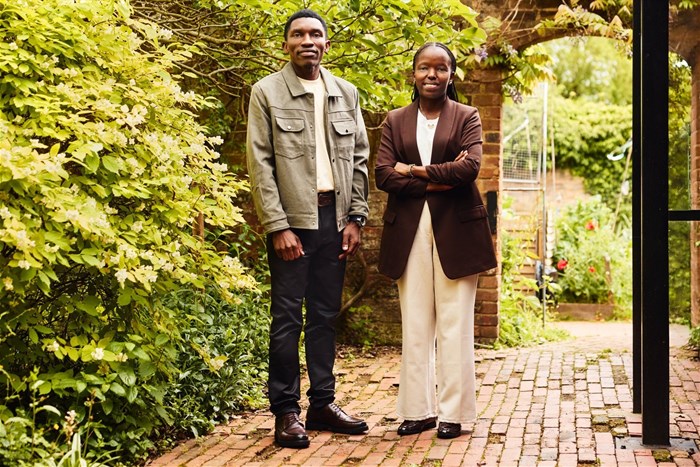 KelTex founders Laetus Buberwa and Emeliana Said. Image supplied. Fresh take on fashionH&M says that this year’s winners bring fresh perspectives to next-generation materials and bio-based alternatives, alongside advances in textile-to-textile recycling and low-impact production, showing how these fields continue to evolve through new ideas and approaches. “Many of the solutions are grounded in the innovators’ own experiences, shaped by real-world challenges and designed to deliver tangible benefits for the communities they serve,” said the fashion brand in a statement. “Together, they target some of fashion’s most emissions-intensive challenges at a time when the industry must accelerate progress towards net zero.” The textile industry remains a significant contributor to global greenhouse gas emissions, with the most intensive impacts occurring in material production and wet processing. Addressing these challenges requires not only new technologies but systemic shifts across the value chain, from how materials are produced to how garments are used and reused. Circular Economy & Waste Management The future of sustainable fashion is Africa at Twyg’s Africa Textile Talks 12 Jun 2026 BreakthroughThe winners of GCA 2026 reflect a growing shift towards early-stage innovation and systems change. Rather than focusing on individual technologies alone, the programme aims to prioritise ideas that can influence entire value chains and unlock broader transformation. “What stands out this year is not just the strength of the ideas, but the people behind them,” says Beatrice Oldenburg, project manager at H&M Foundation. “These changemakers combine a deep understanding of real-world challenges with the drive to address them. “A common thread across many of the solutions is resource efficiency, from reducing waste to making better use of existing materials and resources. “Ultimately, transforming the textile industry will depend on both breakthrough technologies and the people determined to bring them to life.”  And the winners are…
Each winner receives a €200,000 grant and joins the year-long GCA Changemaker Programme, provided by the H&M Foundation in collaboration with strategic partners Accenture and KTH Royal Institute of Technology. Combining systems thinking, expert support and industry connections, the programme is designed to help turn early-stage ideas into solutions that can be tested, refined, and brought into the real world. H&M Foundation takes no equity and no intellectual property; its focus is on enabling solutions that can be adopted across the industry. “The solutions we need already exist; what’s missing is speed and scale,” says Karl-Johan Persson, board member of H&M Foundation. “By supporting changemakers at an early stage, we can help unlock the kind of innovations that don’t just improve the textile industry but transform it.” |