

PR & Communications
Tlhogi Ngwato | You cannot fact-check your way out of outrage
Tlhogi Ngwato 13 Nov 2025
 |
Tlhogi Ngwato | Who owns a country’s story?8 Jul 2026 “A lie can travel halfway around the world while the truth is still putting on its shoes.” Whether or not Mark Twain ever said those words is almost irrelevant. The quote has endured because it captures a defining characteristic of the digital age: narratives often arrive long before evidence does. 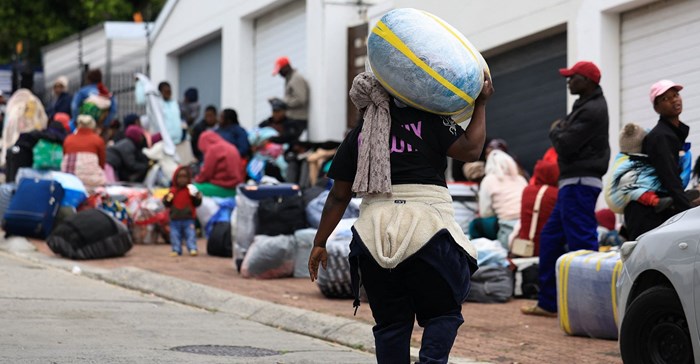 A Zimbabwean migrant carries luggage outside the Zimbabwe Consulate amid fears of anti-immigrant violence ahead of a June 30 deadline set by activists demanding undocumented migrants leave the country, in Cape Town, South Africa, June 22, 2026. REUTERS/Esa Alexander In my previous article, You Cannot Fact-Check Your Way Out of Outrage, I argued that communications professionals have entered an era where facts alone are no longer enough to restore trust. Outrage travels faster than verification, and by the time institutions respond, public opinion has often moved on. Today, however, the challenge has evolved. It is no longer simply about the speed at which misinformation spreads, but about who gets to define a country's story before the country has the opportunity to tell it itself. South Africa's recent public debate around illegal immigration illustrates this perfectly. What should have been a complex discussion about sovereignty, immigration enforcement, state capacity and human dignity has, in many instances, been reduced to competing absolutes. On one side are those who argue that citizens have a legitimate expectation that immigration laws should be enforced. On the other are those who warn, rightly, that xenophobia remains a real and dangerous threat that must be confronted wherever it appears. These positions are not mutually exclusive. A constitutional democracy should be capable of holding both truths at the same time. Yet much of our public discourse leaves little room for that nuance. Labels arrive first, evidence follows later, if at all, and before long the narrative itself becomes the story. As communications professionals, we should find that deeply concerning. Reputation is no longer owned. It is negotiated.There was a time when a nation's reputation was shaped primarily by its institutions. Governments communicated through official channels, journalists interpreted events, diplomats engaged foreign governments and investors formed opinions based largely on economic performance. That ecosystem has fundamentally changed. Today, a country's reputation is negotiated in real time across social media platforms, newsrooms, WhatsApp groups, podcasts, influencers, activists and ordinary citizens armed with smartphones. Influence has become democratised, but accountability has not kept pace. Everyone is now both publisher and narrator, raising an uncomfortable question: who owns a country's story? Is it governments, the media, citizens, activists and digital platforms, or does the loudest narrative simply become accepted truth? The power of the frameCommunications practitioners understand that facts rarely speak for themselves because they are interpreted through frames. Those frames shape what audiences notice, what they debate and, ultimately, how they assign meaning. Describing an event as an immigration protest, a sovereignty debate, a human rights issue or a xenophobic mobilisation does more than describe reality. It shapes how reality is understood. When every discussion about immigration is immediately framed as xenophobia, or every concern about border management is dismissed as intolerance, we stop helping society understand a complex issue. Instead, we ask people to choose between competing narratives. The first casualty is nuance. The media's responsibility extends beyond reportingThis is not an argument against journalism. A free and independent press remains one of democracy's greatest safeguards. But with that freedom comes responsibility. The media does not simply report events; it shapes public understanding through editorial judgement, headlines, source selection and context. That influence demands continual reflection. PR & Communications Tlhogi Ngwato | You cannot fact-check your way out of outrageTlhogi Ngwato 13 Nov 2025 We should be asking whether we are distinguishing between reporting and framing, separating verified facts from rapidly evolving narratives, and creating space for complexity rather than rewarding simplicity because it drives engagement. These are not merely editorial questions. They are questions of public accountability. When nuance is abandoned or complex governance challenges are framed through a single, dominant lens, public understanding is diminished, informed debate becomes more difficult and perception begins to eclipse reality. The consequences do not end with the news cycle. They shape how South Africans understand one another, how institutions are trusted, and how the Republic is understood beyond its borders. In an interconnected world, a country's reputation influences investor confidence, diplomatic relationships, tourism, international partnerships and its moral authority in global affairs. When an incomplete or inaccurate narrative becomes the dominant account, it does more than distort the truth. It reshapes the world's relationship with that country. Correcting the record after the fact rarely carries the same weight as the original narrative. By then, the story has travelled further than the truth, and reputation has already begun to harden around perception rather than evidence. We have seen this beforeSouth Africans understand better than most that narratives can be deliberately constructed, strategically amplified and, over time, accepted as fact. The Bell Pottinger scandal exposed how communication could be weaponised to deepen social divisions for political and commercial gain, but it was never the only example. In the years since, South Africa has repeatedly found itself at the centre of competing domestic and international narratives, many of which have travelled the world long before the underlying facts were fully established or properly interrogated. Whether the subject is race, crime, governance, foreign policy or immigration, the pattern is remarkably similar. A compelling narrative emerges, is amplified across traditional and social media, reinforced through repetition and, before long, begins to shape how the country is understood by audiences far beyond its borders. This is why information has become a strategic asset. A nation's reputation is no longer shaped only by what happens within its borders, but by how those events are framed, interpreted and amplified. Whether the actors are domestic or foreign, political or commercial, coordinated or organic, the lesson remains the same: the battle for public understanding is no longer fought only over facts, but over the narratives that give those facts meaning. The story belongs to all of usIf democracies cannot distinguish between legitimate policy debate and prejudice, between evidence and fabrication, or between reporting and narrative, every national conversation risks becoming another contest over identity rather than understanding. Perhaps the question is not whether South Africa has a reputation problem, but whether we face a broader accountability problem. In an age where narratives travel faster than evidence, protecting the integrity of public discourse can no longer be left to governments or journalists alone. It is a shared governance responsibility. If we fail to recognise that, we may discover that the greatest threat to a country's reputation is not the story others tell about it, but our collective failure to ask who is responsible for telling it well. About Tlhogi NgwatoTlhogi Ngwato, the founder and managing partner of Manaka Publicity, has advised high-profile clients, companies, personalities, sporting personalities and organisations, offering strategic advice that has assisted them through some of their most difficult and thrilling milestones. View my profile and articles... |