 | ||
The era of marketing opinion is ending. Revenue science comes nextWhy digital marketing should no longer be managed as a creative expense, but rather as a measurable investment in profitable growth. 8 Jun 2026  Marketing has spent too many years asking for belief when it should have been building proof. It has asked the Board to believe in awareness. It has asked the CFO to understand engagement. It has asked the CEO to accept that brand equity takes time. It has also asked sales teams to trust that the leads are good, even when the sales numbers do not follow. And, too often, it has done all of this while reporting on impressions, reach, likes, comments, click-through rates and cost per lead as if these were the same as profitable growth. They are not. They are signals. They are touchpoints. They are useful, but only when they are connected to the commercial result they are meant to influence. This is the uncomfortable truth behind marketing's current crisis of trust: the issue is not that marketing lacks value. Marketing can be one of the most powerful growth levers in a business. The issue is that much of the marketing industry has failed to operate with the discipline, measurement and accountability required to consistently prove that value. Greg Stuart, CEO of MMA Global, recently argued that marketing's “age of opinion” is ending. His point is difficult to ignore. Marketing already has decades of empirical knowledge, increasingly sophisticated technology, advanced measurement infrastructure and AI-powered optimisation tools. Yet a large part of the industry still operates as though good marketing is a matter of taste, instinct, creative preference and platform-reported performance. At Offernet, we believe the next era of marketing will not belong to the loudest agency, the cleverest campaign line, or the most beautiful dashboard. That is not a positioning line. It is the discipline we have spent the last decade building. “The real problem is not marketing; it's unaccountable marketing. There is a reason many CEOs and CFOs remain sceptical of marketing. It is not because they do not believe in growth. Nor is it because they do not value customers. It is also not because they are hostile to creativity. It is because they have seen too much marketing spend presented as success without a clear connection to revenue, margin or business growth. This scepticism is visible in the tenure and structure of marketing leadership. Spencer Stuart’s 2025 CMO Tenure Study found that the average Fortune 500 CMO tenure in 2024 was 4.3 years, still below the broader C-Suite average of 4.9 years. It also found that 34% of Fortune 500 companies did not even have an enterprise-wide chief marketing leader in 2024. That does not prove marketing is unimportant, but it does show a structurally unstable role compared with most other executive functions. 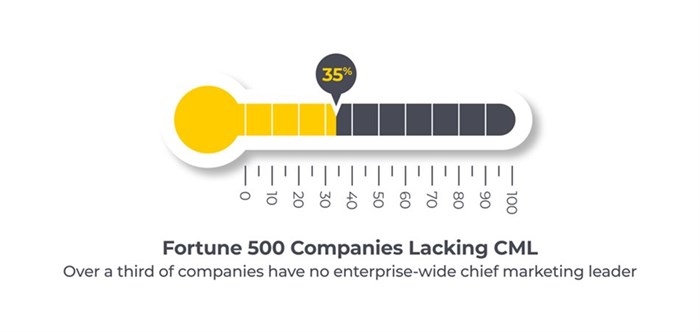 A CMO who cannot connect marketing activity to profitable growth is forced into a defensive position. Every budget cycle becomes a negotiation. Every campaign becomes a justification exercise. Every report becomes a debate about whether the numbers actually mean anything. A board does not struggle to understand marketing because marketing is too complex. A board struggles to trust marketing when marketing cannot explain, in financial terms, what happened to the money. What was invested? What return did it generate? Which part of the customer journey created value? Which part destroyed value? Which audiences converted profitably? Which channels produced noise? And which touchpoints failed? Where should the next Rand, Pound or Dollar be invested? These are not unreasonable questions. They are the same questions a CFO would ask of any capital allocation decision. The issue is that many marketing teams and agencies are not designed to answer them. They can report how many people saw an advert. They can report how many people clicked. They can report how many people completed a form. They can also report what the media platform claims as a conversion. But they often cannot report whether the lead became a sale. They cannot report whether the sale was profitable. They cannot report whether the customer was new or an existing customer. They cannot report whether the call centre contacted the customer quickly enough. They cannot report whether the store had stock. They also cannot report whether the branch, agent, dealership or sales team successfully converted demand. In other words, they can report activity. They cannot always report the commercial truth. That is why marketing loses trust. Not because marketing is unimportant, but because too much of it is still managed as communication rather than revenue engineering. “Digital agencies are often optimising what is easy, not what matters”The rise of digital platforms gave marketers an extraordinary gift: measurement. For the first time, brands could see who viewed an advert, who clicked, who landed, who watched, who abandoned, who converted and, in some cases, who purchased. It should have made marketing more accountable. In many cases, it made marketing more distracted. Nielsen’s 2024 Annual Marketing Report found that while 84% of global marketers were very or extremely confident in their ROI measurement capabilities, only 38% measured traditional and digital marketing together to evaluate holistic ROI. Nielsen also found that marketers’ top KPIs were long-term ROI and full-funnel ROI, yet 70% planned to prioritise performance marketing over brand-building initiatives — a mismatch between stated objectives and actual tactics. 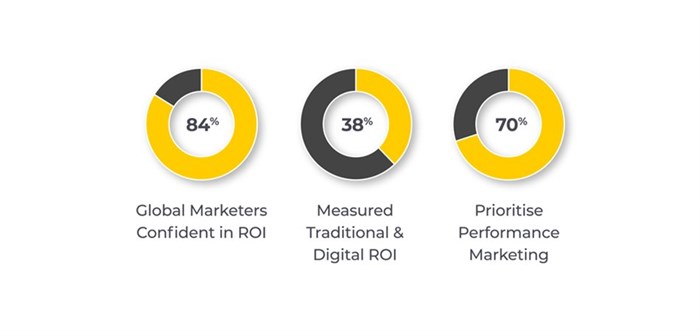 The industry became obsessed with the metrics that were easiest to capture: Reach. Impressions. Engagement. Clicks. Video views. Followers. Cost per lead. These metrics have a place. Offernet measures them, too. But they are not the destination. They are diagnostic indicators along the journey. A high click-through rate can still produce poor revenue. A low cost per lead can still produce low-quality prospects. A campaign can generate thousands of leads and still fail because the call centre does not answer quickly enough. A media platform can report strong performance while the client’s CRM tells a very different story. This is where many creative agencies and so-called digital marketing agencies eat their clients’ budgets. Not always maliciously. Nor incompetently. Often, simply because their measurement stops too early. They optimise the advert, but not the journey. They optimise the click, but not the conversion. They optimise the lead, but not the sale. They also optimise the platform's results, but not the revenue results. That is not revenue generation. That is campaign administration. The commercial damage is significant. Budgets are increased to back audiences that do not convert. Creative concepts are celebrated even when sales decline. Agencies claim success because engagement has improved. Marketing teams defend spending because leads are cheaper. Sales teams complain that leads are poor. Finance sees money leaving the business without a reliable return. “Digital agencies are often optimising what is easy, not what matters”The most important marketing data in a business is often not on Google, Meta, TikTok, LinkedIn, or any other media platform. It is in the CRM. It is in the point-of-sale system. It is in the call centre. In the loan origination platform. It is in the policy administration system. In the dealership management system. In the stock file. It is in the branch report. In the finance department. The CMO Council reported that 97% of marketers considered their organisations ineffective at turning customer data into insights and action, while 36% admitted they lacked the data required to understand their consumers or anticipate their needs. The same research identified gaps in technology systems that fail to connect data into a single customer view as a major barrier. 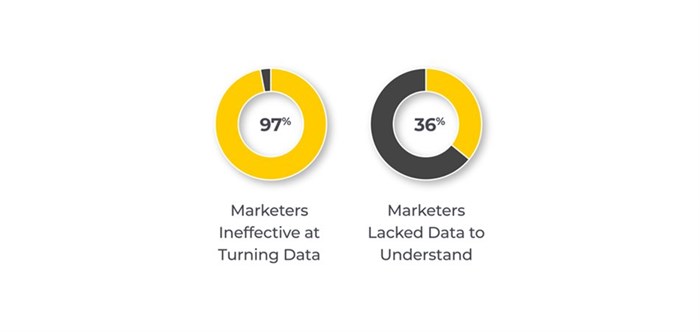 That is where the truth lives. Digital advertising may create demand, but the commercial result is often delivered elsewhere. A customer clicks online but buys in-store. A prospect completes a form but converts through a call centre. A shopper engages with a catalogue but purchases later through an e-commerce platform. A lead is generated on Facebook and then approved or declined in a credit system. A customer enquiry becomes revenue only after operational follow-up. If those offline outcomes are not connected back to the marketing journey, the business is flying blind. Without offline data, marketing cannot distinguish between a lead and a sale. It cannot distinguish between sales and profitable sales. It cannot distinguish between growth and cannibalisation. It cannot distinguish between media and operational problems. It also cannot distinguish between poor demand generation and poor demand conversion. This is the reason so many marketing reports seem impressive but remain commercially unsatisfying. They show motion, not money. At Offernet, we believe offline data is not an optional enhancement to digital marketing. It is the accountability layer that turns campaign reporting into revenue intelligence. “Revenue does not live in the advert. It lives across the journey.”Most businesses do not have a single marketing problem. They have a system problem. The advert may be good, but the landing page may be slow. The landing page may be good, but the form may be too long. The form may work, but the lead may not be sent to the CRM. The lead may reach the CRM, but the sales agent may call too late. The sales agent may call, but the customer may not qualify. The customer may qualify, but the store may not have stock. The sale may happen, but the margin may be poor. The first purchase may look successful, but the customer may never return. This is why we talk about touchpoints. Every commercial journey is made up of moments. Some are visible; some are hidden. Some happen online. Some happen offline. Some sit in marketing. Some sit in sales. Some sit in operations. And some sit in finance. Each touchpoint either creates momentum or causes leakage. The role of revenue science is to identify which is which. This is the thinking behind Offernet’s Touchpoint® methodology. Touchpoint® is designed to track the customer journey across the points of contact that matter, creating feedback metrics or “data echoes” that show how users interact with each stage of the journey. These data echoes allow us to measure the journey from upstream media signals through to downstream revenue performance. Offernet’s Touchpoint® methodology exists to make that journey visible. 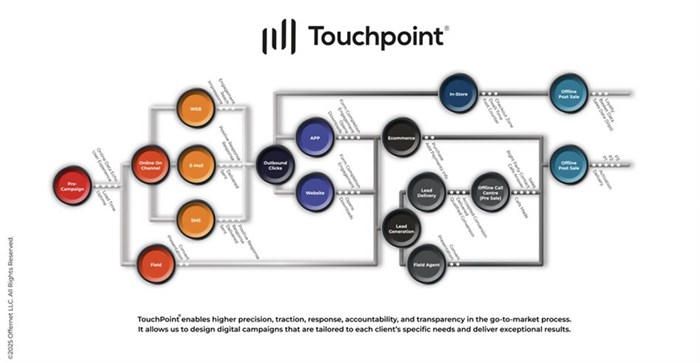 It allows a business to see whether the problem sits at impression level, click level, landing page level, form level, lead level, contact level, sales level, fulfilment level or revenue level. That is a fundamentally different conversation from “the campaign is not working”. It changes the question from: Did the advert perform? To: Where did the revenue journey break? That is where the science begins. “Science requires repeatable protocols, not campaign opinions”Marketing likes to talk about creativity. It should. Creativity matters. But creativity without measurement is theatre. Revenue generation requires more than ideas. It requires protocols. It requires instrumentation. It requires hypotheses. It requires testing. It requires feedback loops. It requires the discipline to compare expected outcomes with actual outcomes. It also requires the humility to accept when the data disproves the opinion. This is how every serious science works. You define the problem. You identify the variables. You create a hypothesis. You instrument the system. You run the test. You measure the result. You isolate the cause. You repeat the process. You improve the model. That is the same logic Offernet applies to digital revenue generation. We do not assume the media plan is the answer. We do not assume that a new creative execution will solve the problem. We do not assume that more budget will produce more sales. Nor do we assume that a campaign is successful because a platform dashboard says it is. We start by mapping the revenue journey. Then we identify the touchpoints that matter. Then we determine what needs to be measured, when it should be measured, and how it should be linked to the commercial result. This is why Offernet does not describe itself as a digital agency. We are a data-informed, AI-powered revenue technology company focused on revenue optimisation. Our work combines data, technology, media execution, advisory, measurement architecture and continuous optimisation to improve the economics of digital distribution. The difference is important. A digital agency runs campaigns. A revenue science partner improves the commercial system that those campaigns feed into. “The CFO should care, because marketing is capital allocation”A marketing budget is not a gift to the brand department. It is capital. It is money invested today in expectation of a future return. That return may be immediate sales, new customers, higher conversion rates, improved retention, stronger lifetime value, reduced acquisition costs, improved market share, or long-term brand demand. But it must be governed like an investment. This is why Offernet believes digital distribution and revenue-generating marketing should sit much closer to the Chief Revenue Officer and the CFO than traditional marketing structures often allow. The CFO does not need to approve every advert. The CRO does not need to write the campaign line. Nor does the CEO need to manage media buying. But the commercial governance of marketing spend should not sit in a silo that rewards activity rather than financial impact. If marketing cannot show how money moves through the customer journey and returns as profitable revenue, finance will treat it as a cost. If marketing can show how money is invested, where it creates value, where it leaks, and how the next investment can produce a better return, finance can treat it as a growth asset. That is the shift Offernet is designed to enable. From marketing as an expense to marketing as an investment. From campaign reporting to revenue intelligence. From opinion-led activity to measurable, repeatable revenue science. “AI will not save marketing from weak measurement”AI is real. It is powerful. It will change marketing permanently. It can help identify patterns, generate creative variations, improve audience segmentation, automate optimisation, predict propensity, detect anomalies and accelerate decision-making. But AI does not automatically create truth. If the wrong data is connected, AI will optimise the wrong outcome. If offline sales are missing, AI will overvalue online behaviour. If lead quality is not measured, AI will chase cheaper leads. If the CRM is disconnected, AI will not know which prospects became customers. And if profitability is excluded, AI may scale revenue at the expense of margins. AI does not fix a broken measurement architecture.It scales it. This is why Offernet’s approach is not simply AI-powered marketing. It is data-informed, AI-powered revenue optimisation. The order matters. First, understand the commercial objective. Second, map the customer journey. Third, identify the touchpoints that matter. Fourth, connect online and offline data. Fifth, establish the feedback loops. Sixth, use technology and AI to optimise with speed and precision. Used in this way, AI becomes a force multiplier for revenue science. Used without this discipline, it becomes a shortcut to making expensive mistakes. “The touchpoint map changes the boardroom conversation”The power of the touchpoint map is that it provides a common language for marketing, sales, operations, and finance. Instead of debating opinions, the business can diagnose the journey. If impressions are deep but clicks are low, the issue may be audience, creative, offer or placement. If clicks are high but landing page views are low, the issue may be page speed, tracking, traffic quality or site performance. If landing page views are high, but forms are not completed, the issue may be trust, friction, form design, offer quality or mobile experience. If leads are high but sales are low, the issue may be lead quality, sales response time, call centre capacity, affordability, branch execution, stock availability, or product-market fit. And if sales are high but profit is poor, the issue may be pricing, discounting, acquisition costs, customer quality, or customer retention. The touchpoint map stops marketing from hiding behind vanity metrics. It also stops the rest of the organisation from blaming marketing for failures that happen after the lead is created. That is critical. In many businesses, marketing is blamed for poor leads when the real problem is slow follow-up. Sales is blamed for poor conversion when the real problem is poor targeting. The media is blamed for weak performance when the real problem is landing page friction. And the agency is blamed for poor outcomes when the real problems are stock availability, credit approval, branch execution, or operational leakage. A proper touchpoint methodology creates accountability across the entire revenue system. That is how trust is rebuilt. “Proof replaces persuasion”One of the strongest tests of any marketing model is whether the provider is prepared to share risk. Offernet’s results-based billing methodology is important, because it changes the commercial relationship. Instead of simply charging for activity, Offernet can invest its own capital into campaigns and be paid against a pre-agreed conversion metric. That model is not possible unless you understand the revenue journey. It is not possible if you only measure impressions and clicks. It is not possible if you cannot connect digital demand to offline outcomes. It is also not possible if you cannot diagnose where the conversion is failing. Results-based billing requires a scientific operating model because it forces accountability. It aligns incentives. It makes measurement non-negotiable. It turns marketing from a cost of service into a performance partnership. That is the kind of discipline the next era of marketing requires. The industry does not need more persuasion. It needs more proof. “What the next generation of marketing leaders must prove”The next generation of marketing leaders will not be judged by how much activity they can generate. They will be judged by how well they can connect activity to profitable growth. They will need to prove that they understand the difference between attention and intent. Between a click and a customer. Between a lead and a sale. Between revenue and profit. Between short-term conversion and long-term value. And they will need to prove that they can integrate online and offline data into a coherent customer view. They will need to prove that they can use measurement not merely to report what happened, but to improve what happens next. They will also need to prove that marketing is not a department of opinions, but a discipline of commercial judgment. That is why Offernet has spent the last decade building the tools, protocols and repeatable processes required to make digital revenue generation measurable, accountable and optimisable. Our belief is simple: if marketing wants to be trusted as the business's growth engine, it must behave like one. It must speak the language of revenue. It must understand the mechanics of distribution. It must measure the full customer journey. It must integrate offline data. It must optimise beyond the advert. It must treat every budget as an investment. It must also be able to show, with evidence, how that investment creates value. That is the end of marketing opinion. And the beginning of revenue science. The new standardThe future of marketing will not be less creative. It will be more accountable. The best creative will still matter. Brand will still matter. Media strategy will still matter. Customer insight will also still matter. AI fluency will matter more every year. But none of these will be enough on their own. The new standard is commercial measurability. The new standard is knowing which touchpoints matter. The new standard is connecting digital activity to offline revenue. The new standard is identifying leakage before more budget is wasted. And the new standard is treating marketing spend with the same discipline as any other investment decision. At the end of the day, the success of your marketing initiatives is not measured by how many people saw your advert, liked your post, clicked your link or filled in your form. It is measured by your ability to optimise revenue. That is not an agency opinion. That is the science of growth. About JG BezuidenhoutJG Bezuidenhout is a founding partner of the South African subsidiary of Offernet.net, the data technology company housed in London, United Kingdom. Although based in Cape Town, JG is the global head of Offernet's advisory and innovation hub and, as such, is responsible for the monitoring and implementation of cutting-edge solutions, particularly within the digital marketing environment. View my profile and articles...
| ||

