



Top stories

Energy & Mining#AEW2026: Eni, Dangote, TotalEnergies and more win big at African Energy Awards
15 Oct 2026


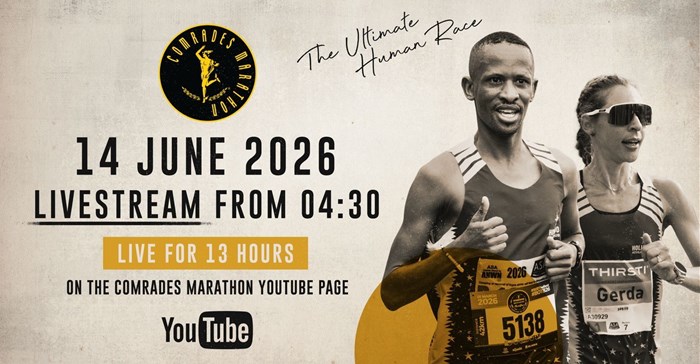
I stayed with it for more than nine of those hours across my Smart TV and my phone. By the time the day was done, one thing had become impossible to ignore: the line between ‘streaming’ and ‘television’ had quietly disappeared.
Let me start with the honest verdict, because that matters more than the theory.
The stream itself was flawless. No buffering, no drop-outs, no quality wobble between the big screen and the handset.
There were definitely audio issues, especially the ambient sounds from the start and finish and with several on-the-road and finish line interviews, but these came from the event site itself, which is a production-on-the-ground challenge that sits well outside the platform’s control.
On a 13-hour live feed, holding that standard is a serious achievement.
What lifted it from ‘watchable’ to genuinely compelling was the storytelling.
There was no shortage of drama to carry it, either. Records fell at the front, including new Up Run benchmarks, which gave the long middle hours real stakes.
That is the test of good television: it has to reward the time you give it. This race certainly did. It never fails.
Here is the part our industry needs to sit with. I watched this on the same Smart TV, in the same seat, with the same expectation of quality that I bring to any broadcast.
The delivery pipe was YouTube. The experience was television.
We have spent years treating YouTube as a secondary screen, a home for highlights and clips and second-window catch-up.
On Sunday, it was the primary screen for a national tentpole event, and it held up to that billing without an asterisk.
If a platform delivers a flawless 13-hour live broadcast to a living-room set, the distinction between ‘TV’ and ‘YouTube’ is a category we are keeping alive out of habit.
For the first time in its 106-year history, the world’s greatest ultramarathon was watchable anywhere on the planet. A race that has always been a deeply South African ritual became a global live event.
That is a meaningful unlock for the property, for the sport, but most importantly for the country. The value to our travel and tourism industry was immense, and if measured properly, will yield significant real impact and economic benefit long after the 12-hour gun was fired.
For the South African sports industry, this was an important first in its own right:
That dual structure is the interesting bit: a working example of YouTube and linear operating together, each doing what it does best.
SABC delivered the domestic free-to-air reach. YouTube delivered global access and the on-demand long tail. Rights holders here now have a live, local proof point to study, instead of an overseas case study to translate into our conditions.
This is where it gets interesting for those of us who sell audiences for a living.
A development like this is only as valuable as our ability to measure it properly, and that is the work.
Over the next few days, our team at Nielsen Sports SA will be doing a great deal of audience analysis to understand the true impact of yesterday.
The goal is to give sponsors and advertisers a total consumption view, which means:
Counting only the live linear number would badly understate what happened on Sunday.
A modern understanding of viewership has to capture the full footprint: live, on-demand and the clip ecosystem that travels far beyond the broadcast window.
That total view is what turns a broadcast innovation into a credible commercial proposition for partners.
YouTube is a major player in this market going forward. That is simply the reality after yesterday, and it deserves a clear-eyed assessment on its merits.
A few open questions are worth holding onto, in the interest of balance:
Global reach and strong consumption are a long way from automatically translating into the rights fees and sponsorship yield that fund a property at this scale.
The platform that owns the relationship and the data shapes the long-term leverage between rights holders, broadcasters and sponsors.
Those questions sharpen the opportunity rather than dimming it. Sunday gave us a clean, local, large-scale demonstration that YouTube can carry a national tentpole event to television-grade standard and to a global audience at the same time.
The job now is to measure it honestly, understand the full consumption picture and let the commercial story follow the evidence.
For the first time, I watched Comrades the way the rest of the world will increasingly watch live sport. It worked. That is the headline, and it is one worth taking seriously.
